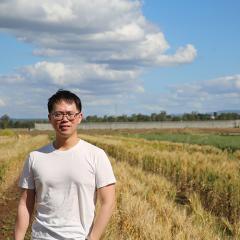
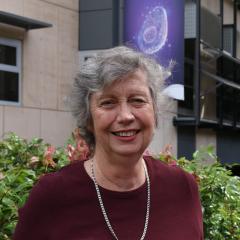
Accelerating genetic gain in grain crops will be the subject of a 15-million dollar International Research Training Group (IRTG) funded by the German Research Foundation (DFG) in association with The University of Queensland.
Extensive mathematical modelling and analysis of Australia’s wheat and sorghum crops has for the first time quantified the potential of modifying photosynthesis to boost yield.
What makes the perfect avocado?
In a world-first, University of Queensland scientists have completed mapping the genome of the popular fruit, a resource that can drive future research and innovation opportunities for Australian avocado growers.
Reducing the consumption of sugary drinks in remote Indigenous communities and creating business opportunities are the twin aims of University of Queensland PhD candidate Jessica Cartwright’s research.
The collectivist practices of Aboriginal communities over tens of thousands of years could help solve the problems facing global food production systems, according to author, farmer and educator, Bruce Pascoe.
Methane emissions could be substantially cut through a $7.5-million project to develop slow-release biopolymer technology for cattle containing a gas-reducing bioactive.
Australia’s increasingly diverse food culture is benefitting from the wider recognition of Indigenous bush foods, which University of Queensland Professor Henrietta Marrie AM said must be brought to the mainstream in ways that combine traditional knowledge systems with science.
When it comes to the environmental footprint of livestock production and the consumption of livestock-derived foods—milk, meat and eggs—Jimmy Smith, director general of the International Livestock Research Institute (ILRI) believes that “where one stands is a function of where one sits”.
Professor Paul PG Gauthier is looking to the future. Specifically, how to help feeding the world, a problem exercising the brain of scientists globally.