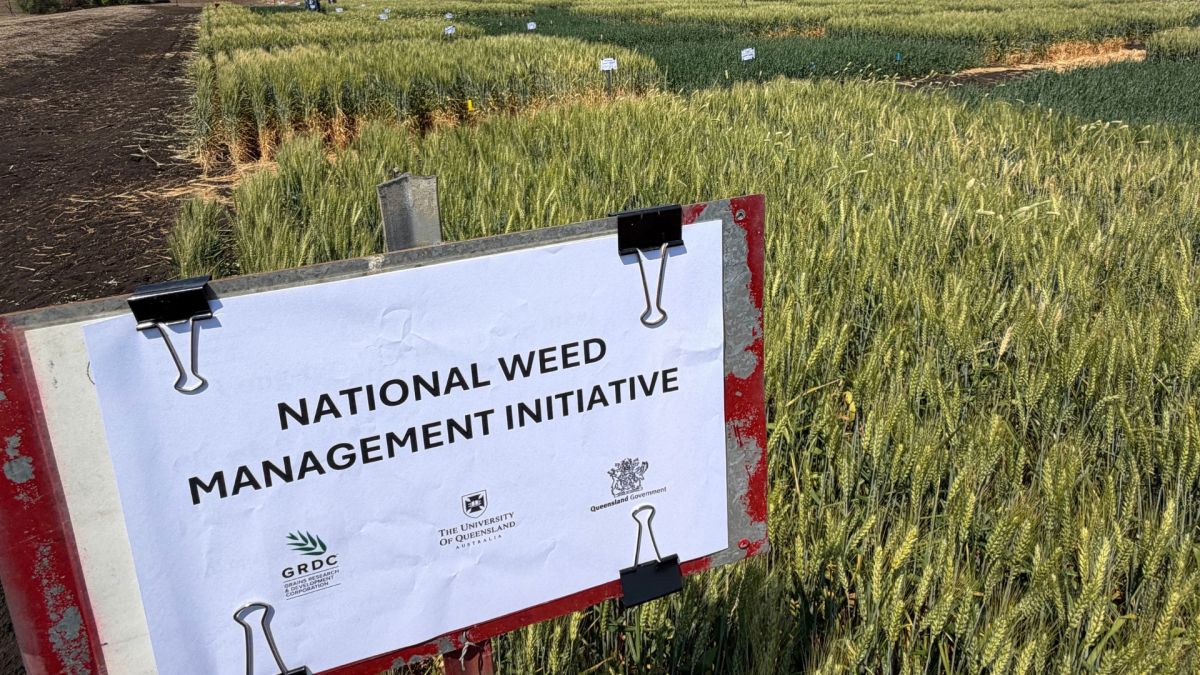
New field trials at the Queensland Department of Primary Industries (DPI) will test integrated ways to manage two of the northern grain region's most persistent problem weeds: annual ryegrass and paradoxa grass.
The trials are led by the University of Queensland (UQ) in collaboration with DPI and are part of the Grains Research and Development Corporation’s (GRDC) Weed Management Initiative.
Scheduled to run during 2026 and 2027 at DPI's Wellcamp site, the trials mark a new partnership, bringing UQ's weed science research together with DPI's field trial capability.
GRDC’s Sarah Morran, Manager Weeds, said both weeds were becoming a persistent problem for growers in southern Qld and northern NSW, largely because they have developed resistance to many post-emergent herbicides.
“Annual ryegrass is estimated to be the costliest weed for Australian grain growers to manage nationally, and paradoxa grass has become an increasing concern in wheat and chickpea across the same region,” Ms Morran said.

"The Weed Management Initiative not only helps reduce the economic impact of weeds on our faming systems, but it also enables collaborative research like UQ and DPI's to tackle emerging challenges for growers."
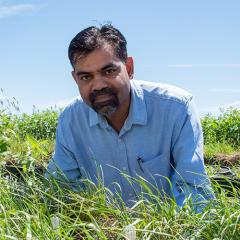
Professor Bhagirath Chauhan, from UQ's Queensland Alliance for Agriculture and Food Innovation (QAAFI), leads the GRDC Weed Management Initiative northern node.
He said an integrated approach was needed because chemical control alone was no longer reliable in many paddocks.
“These weeds cost growers significant yield and income every year and relying on a single herbicide mode of action is not a long-term solution,” Prof Chauhan said.
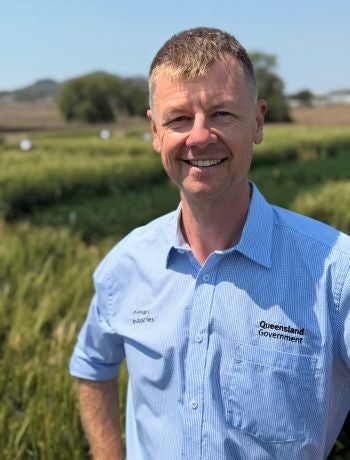
Dr Michael Widderick, Principal Research Scientist, DPI said rather than testing herbicides in isolation, the Wellcamp trials will combine sowing time, seed rate and herbicide treatments to find out which combinations work best.
“Combining sowing time, seed rate and herbicide choice gives growers a lot more to work with than chemical control alone, and that’s exactly what this Wellcamp trial is set up to test,” Dr Widderick said.
For annual ryegrass, researchers are comparing sowing in early May with sowing four weeks later, at sowing rates of 80 and 120 seeds per square metre.
Prof Chauhan said sowing time was a powerful and often overlooked tool in integrated weed management.
“Early sowing can make a wheat crop far more competitive against late-emerging weeds, but only when it’s backed up by an effective pre-emergent herbicide,” Prof Chauhan said.
“Where growers are relying on a post-emergent herbicide alone, sowing later can actually work in their favour, because most weed seedlings have already emerged by the time the crop comes up.”
The Wellcamp trials build on UQ's earlier work on paradoxa grass in wheat and chickpea, which challenged the industry's traditional reliance on post-emergent herbicides alone.
In 2024, on-farm trials combining pre-emergent herbicides with crop competition measures – including seeding rate, row spacing and tyne rather than disc seeding - outperformed the industry-standard single post-emergent herbicide approach in three of four sites, recording wheat yield increases of up to 27 per cent and clear weed suppression benefits in chickpea.
UQ PhD candidate Nisha Kharel is studying the biology and ecology of annual ryegrass across the northern grain region, including how weather, emergence timing, dormancy and temperature affect the weed's reproduction and persistence.
Another UQ PhD candidate Simran Sindhu the biology and management of paradoxa grass in the northern grain region.
Growers and advisers from the Moree and Tamworth districts have offered problem-weed paddocks for related UQ trials, with early results from the first season now being repeated and refined. More information is available on GRDC's weed management resources page.
View the original article by GRDC Groundcover here.
Contacts: GRDC Manager Weeds, Sarah Morran sarah.morran@grdc.com.au 0447 158 908; UQ Professor of weed science, Bhagirath Chauhan b.chauhan@uq.edu.au 0427 923 272; DPI Principal Research Scientist Dr Michael Widderick Michael.widderick@dpi.qld.gov.au 07 4529 1325; DPI media media@dpi.qld.gov.au; and Shaun Devitt Seftons Shaun.Devitt@seftons.com.au 0400 906 451.
Photos and video footage available via Dropbox
About Us: GRDC is one of 15 Rural Research and Development Corporations (RDCs) responsible for planning, investing in and overseeing research, development and extension (RD&E) for 27 leviable grain crops. Our purpose is to invest in RD&E to create enduring profitability for Australian grain growers.
The Queensland Alliance for Agriculture and Food Innovation is a research institute at The University of Queensland, established with and supported by the Queensland Department of Primary Industries.