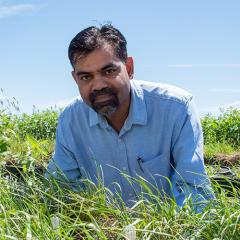
A trilogy of books about banana production, genetics, and pests and diseases edited by Professor Andre Drenth from The University of Queensland and Prof Gert Kema from Wageningen University will serve as a valuable resource for everything bananas and a good starting point for future research.
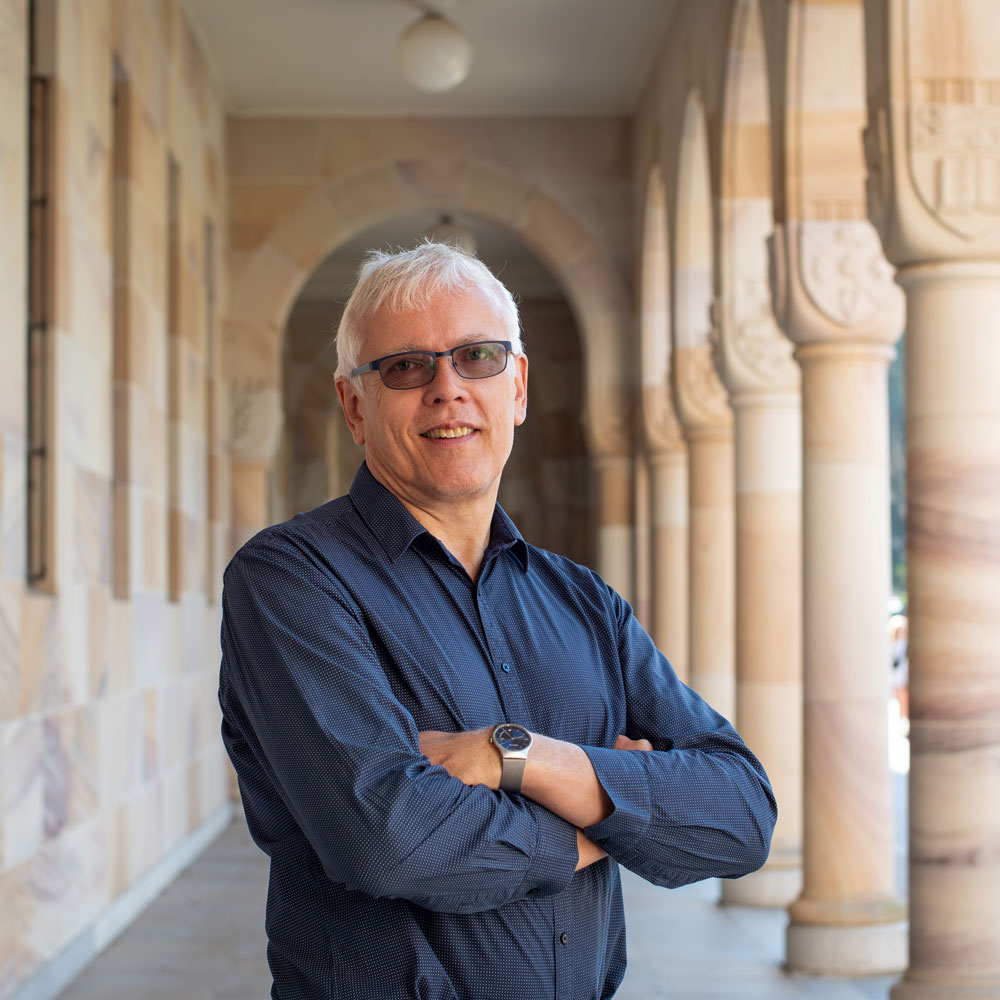
Professor Drenth, a plant pathologist from UQ’s Queensland Alliance for Agriculture and Food Innovation, says the three volumes featuring input from the world’s key experts on a wide range of banana related subjects are a must read for future researchers.
“Instead of looking at large numbers of individual research papers or even reviews, if you’re looking at bananas, these books are a starting point to obtain an understanding of the key issues and challenges in the production of bananas,” Professor Drenth said.
“Volume one is about how to improve production and sustainability, the second targets genetic improvement and breeding over the past 100 years and the final and largest book is about the challenge of pests and diseases and how to manage them in a sustainable manner.
“The three volumes provide a compelling overview of all the underlying issues, the trends, the background to how things came about, the limits of some production systems as well as the challenges.
“There are also details about past issues, approaches and failures, to help the reader to understand what has come before and where future solutions may be found.”
Professor Drenth said while academics publish many papers on their research each year, the trilogy offers a much bigger perspective.
“I see papers as individual puzzle pieces, while a review is a little part of the puzzle together, but a book should really be a bird’s eye view of what is happening in the field as whole.
“For example, if someone wants to know something about blood disease and bananas, one of our chapters gives a very good overview of what it is, what it does, the disease cycle, how it came about, what research has been done, and where to from here.
“The books also offer instructions and references for where to find more information.”
He said while the trilogy does not qualify as bedside reading, there is a target audience.
“People in banana research, people who work in the industry, large plantation owners, growers, and government officials dealing with trade will read it and see it as a valuable resource to consult first.
“These books offer timeless information from people considered experts in that discipline, and across the contributions, we’ve tried to filter out what is it that we know and that we do not know that is relevant, what information can we can all agree on, and the key to any good book is to decide what not to include.
“This information should remain as a reference of choice for at least a few decades.”
Media contacts: UQ Prof Andre Drenth,a.drenth@uq.edu.au, +61 404 430 440; QAAFI Communications, Natalie MacGregor, n.macgregor@uq.edu.au, +61 409 135 651.
Images are available via Dropbox.
The Queensland Alliance for Agriculture and Food Innovation is a research institute at The University of Queensland, established with and supported by the Department of Primary Industries.