
Dr Christie Warburton
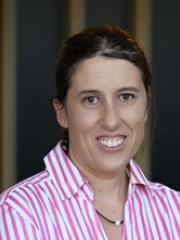
Christie Warburton completed her PhD at the Queensland Alliance for Agriculture and Food Innovation in late 2023 to be conferred in 2024. Her research interest is in the development of multi-breed genomic evaluations for the north Australian beef industry.
Christie grew up on a cattle station near Comet in central Queensland. With a passion for agriculture and the bush, Christie studied a Bachelor of Rural Science with Honours at the University of New England in Armidale. After graduating, Christie worked in a number of positions within the agricultural industry, in both academic and industry roles, before taking time away from her career to start and raise her family. She now lives with her family on a small farm in the Darling Downs, studying her PhD part-time while raising her son and supporting their family business.
Contact: Christie Warburton, PhD candidate, Centre for Animal Science, QAAFI at UQ, M. +61 437 840 853 or E. c.warburton@uq.edu.au
Researcher biography
Dr Christie Warburton is a livestock geneticist at the Queensland Alliance for Agriculture and Food Innovation (QAAFI), The University of Queensland. Her research uses quantitative genetics, genomics, and whole‑genome sequence data to improve genetic evaluation and breeding outcomes across beef cattle, dairy cattle, sheep, and buffalo, with projects spanning Australia and international production systems.
Christie's work focuses on understanding genomic architecture in multi-breed and multi-subspecies populations, including population stratification, SNP ascertainment bias, and IBS/IBD relationships. She develops and applies methods that improve the accuracy and fairness of genomic predictions in composite, crossbred, and tropically adapted livestock.
She is passionate about mentoring students and working collaboratively on projects that sit at the intersection of advanced statistical genomics and real‑world breeding challenges. Christie welcomes Honours and higher degree research students interested in livestock genomics, breeding program design, and improving the productivity, resilience, and sustainability of global livestock systems.